
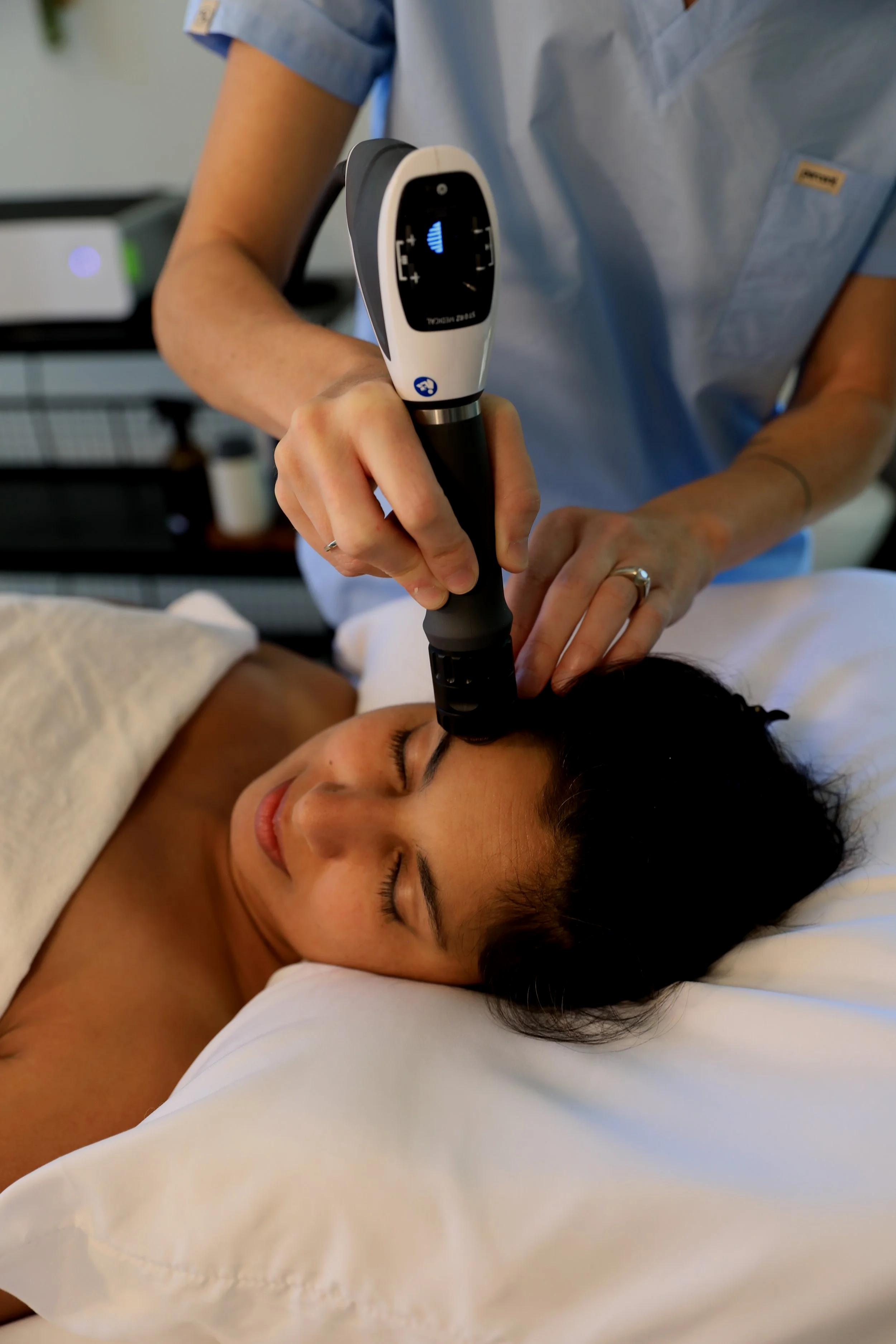
What is Neuro Body® Radial Shockwave Therapy Actually Doing?
Radial shockwave therapy has been studied in hundreds of clinical trials and is widely used in sports medicine, orthopedics, and rehabilitation for chronic soft-tissue conditions.
It has been extensively researched for conditions such as:
• Plantar fasciitis • Achilles tendinopathy • Tennis elbow (lateral epicondylitis) • Patellar tendinopathy • Calcific shoulder tendinopathy • Myofascial trigger points • Chronic tendon injuries
So we know it works!
But the deeper question is:
What is actually happening inside the body when this therapy is applied?
What Actually Happens in the Body with Shockwave Therapy?
The Cellular “Wake-Up Call”
When you are in pain, injured, stiff, or the body is under chronic stress, your tissue can gradually shift into a low-energy, degenerative state.
This often includes:
• Poor blood supply • Disorganized collagen fibers • Reduced cellular activity • Very little repair signaling
In this state, the body simply doesn’t have the metabolic energy or communication signals needed to repair the tissue effectively. Pain and stiffness can persist because the healing process has essentially stalled out.
Shockwave Introduces a New Signal
In simple terms, Radial Shockwave Therapy works by introducing precise mechanical pulses into the tissue.
This process triggers several important biological responses:
• Mechanical pulses —> activate cells = mechanotransduction
• Mechanical energy (the pulse) —> biological activity inside the cells
Shockwave triggers cells to send out repair signals, acting like a chemical beacon that attracts stem cells and regenerative cells.
• Signals = natural repair and rebuilding
Healing tissue requires a significant amount of cellular energy.
When tissues are chronically injured or stressed, cells often become:
• Metabolically sluggish • Low in energy • Less capable of repairing themselves effectively
Shockwave —> reactivate these cellular processes, encouraging tissues to begin repairing and reorganizing again.
It's not forcing an outside change, it is helping the body re-activate its own repair systems.
Creating better: • circulation • cellular activity • tissue repair • healthier movement
Circulation is everything → Angiogenesis
One of the most well-documented effects of Shockwave Therapy is angiogenesis - the formation of new blood vessels and capillaries.
Interestingly, the therapy is not simply forcing blood flow into the area.
Instead, it triggers a regenerative signaling cascade that encourages the body to build new microvasculature naturally.
This leads to: • Improved microcirculation • Increased oxygen delivery • Better nutrient supply to injured or irritated tissue
The Fascia Connection
You can think of fascia as a body-wide, head to toe onesie of sensory fabric that is deeply intertwined, surrounds and connects: • muscles • tendons • ligaments • joints • organs
This means fascia is not just structural “packing material.” It contains a very high density of sensory receptors, and functions like a body-wide communication network that constantly sends information to the brain about: • movement • tension • pressure • body position • internal physiological state.
Radial shockwave therapy doesn’t only affect one isolated structure; its mechanical waves interact with the body’s fascial network, the continuous connective tissue matrix that allows energy to travel through the system and influence tension patterns throughout the body.
Remember, your body isn’t randomly tight or restricted, it is constantly adapting to the signals it receives. Quality matters, as fascia is constantly listening and responding, restoring clearer communication throughout the network.
Shockwave → Fascia network → Body-wide connectivity → Broader effects
Stimulate sensory receptors in fascia →Reduce long-held tension patterns
↓
Healthier communication between tissue and nervous system
Piezoelectric Signaling in Collagen
Fascia is rich in collagen fibers, one of the primary structural proteins in connective tissue.
Collagen has a fascinating property called piezoelectricity.
This means that when collagen fibers are: • Compressed • Stretched • Vibrated --> They can generate tiny electrical signals.
These micro-electrical potentials are believed to play a role in:
• Tissue repair • Cellular communication• Connective tissue remodeling
This phenomenon has been demonstrated in bone and connective tissue research.
When radial shockwave therapy is applied, the mechanical stimulus can travel through the connective tissue network, potentially influencing these piezoelectric signaling pathways.
The Bigger Picture - Relief
Rather than acting on a single isolated injury, this therapy interacts with the body’s communication network.
Through a combination of:
• Cellular signaling • Circulatory changes • Fascial stimulation • Piezoelectric activity within collagen
The body receives new information that can help shift tissues away from chronic stress patterns and toward repair, relaxation, and improved movement.
Shockwave → Cellular Signaling → Circulation → Fascia → Nervous System → Tissue Repair = Relief!
Radial vs. Focused Shockwave
Shockwave therapy is a non-invasive treatment used to help reduce pain and stimulate healing. There are two main types of shockwave therapy: Radial and Focused
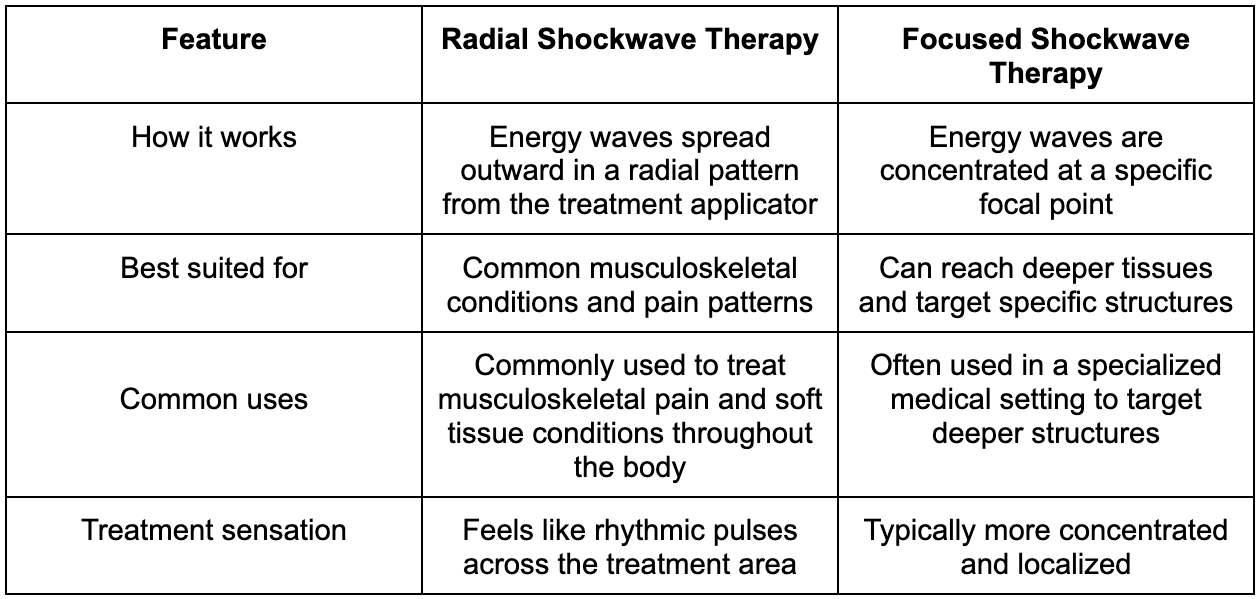
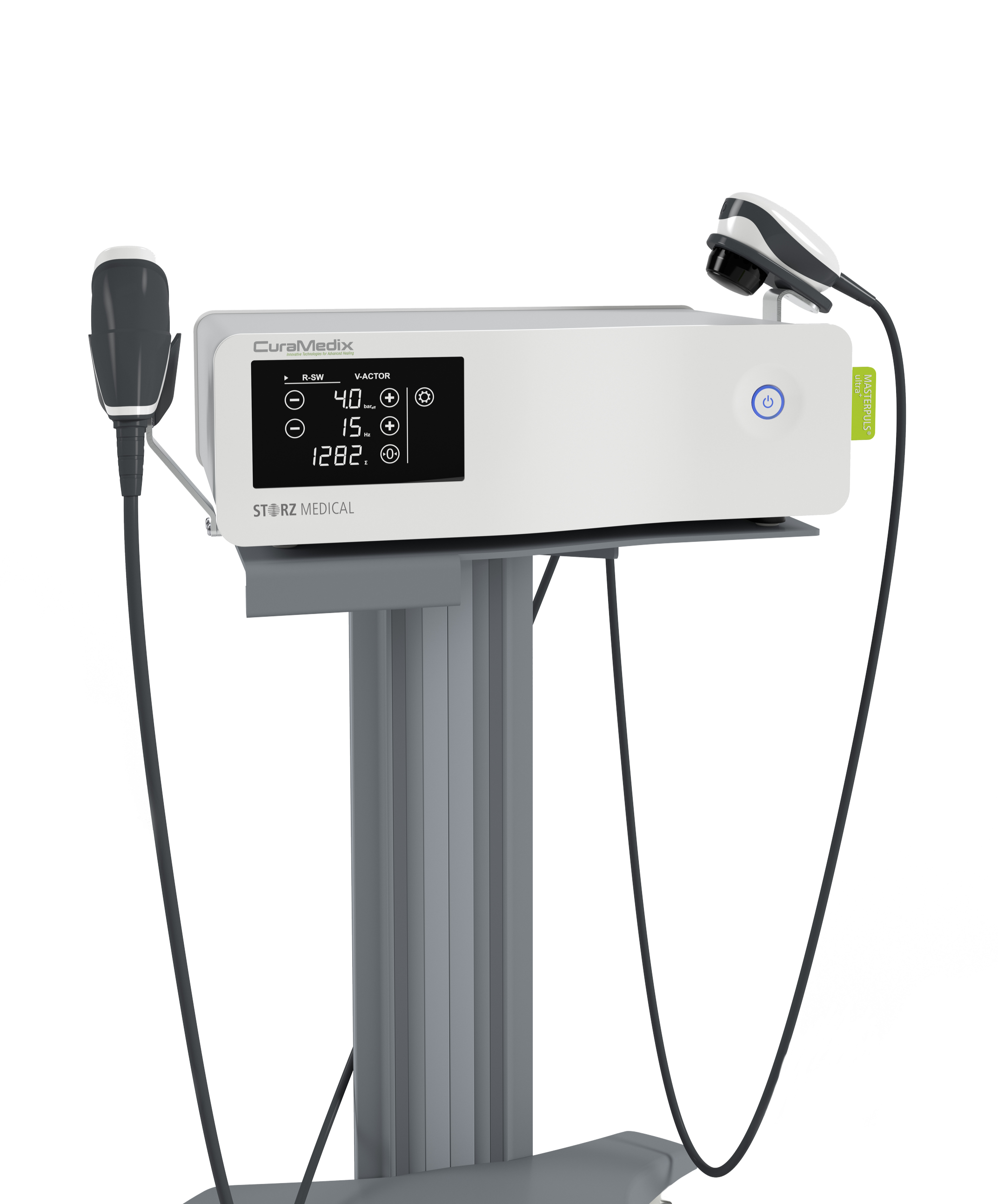
Radial shockwave therapy is widely used in clinical practice for treating many common tendon and soft-tissue conditions. It is a safe, non-invasive treatment designed to stimulate circulation and support the body’s natural healing process.
Both radial and focused shockwaves are effective.
Multiple randomized controlled trials (RCTs) and systematic reviews show that both radial and focused shockwave therapy can reduce pain and improve function in musculoskeletal conditions.
The research generally shows:
✓ Both radial and focused produce mechanical stimulation and biological responses
✓ Both improve pain and function in clinical trials
✓ Clinical outcomes are often similar

About Me
Over the past 15 years, I’ve had the privilege of helping clients relieve pain, restore movement, create adaptability and pliability in the body. My current focus is on shockwave therapy, a cutting-edge technology that powerfully softens muscle/fascia tissue and unlocks chronic tension. It’s been one of the most effective tools I’ve found to help people experience long-term relief and renewed vitality.
My journey into the world of movement and healing began at an early age. I spent most of my young life in a ballet studio, where I developed a deep respect for the discipline, precision, and strength of the human body. At 19 years old, I became a professional ballet dancer with Texas Ballet Theater. While dancing professionally, I expanded that understanding by becoming classically trained and certified in Pilates through the Physical Mind Institute, allowing me to support both dancers, non-dancers, athletes and clients in building strength and alignment.
After leaving the stage I pursued my passion for wellness from another angle and graduated from Le Cordon Bleu culinary school—but it wasn’t long before I felt called back to the body. I opened my own Pilates studio, and I also received my license as massage therapist. Rather than practicing traditional massage, for over 10 years I studied under Dr. Thomas Griner, where I learned to see and work with muscle/fascia tissue in an entirely new way. His mentorship transformed how I understand the body and laid the foundation for the work I do today.